Blue Aliens. Billion Dollars. Zero Doubt.

James Cameron’s Avatar series isn’t just successful, it’s generationally dominant. With Avatar, Avatar: The Way of Water and Avatar: Fire and Ash now released, the trilogy has pulled in more than $6.7 billion at the global box office. That’s a number most franchises can’t even imagine reaching. And yet, despite ongoing criticism about similar story beats and predictable plotting, audiences continue to turn up in huge numbers. So what’s really driving Avatar’s box office power?
The answer starts with visuals. James Cameron has never been interested in doing what’s possible he’s interested in doing what isn’t possible yet. When he first conceived Avatar in the 1990s, he made the unusual decision to put the project on hold because the technology simply didn’t exist to realise his vision. Rather than compromise, he waited. That patience led to pioneering motion capture techniques and a new era of 3D filmmaking that reshaped the industry when the first film arrived in 2009.
 The original Avatar revolutionised blockbuster visuals. The Way of Water pushed boundaries again, achieving something many thought couldn’t be done at scale: filming underwater with performance capture. Fire and Ash continues that technological escalation with its depiction of the volcanic world of the Ash People. Even as the lowest-grossing film of the three at $1.44 billion and counting, it still ranks among the top three films of 2025. That’s the Cameron effect, when your “underperformance” still clears well over a billion dollars.
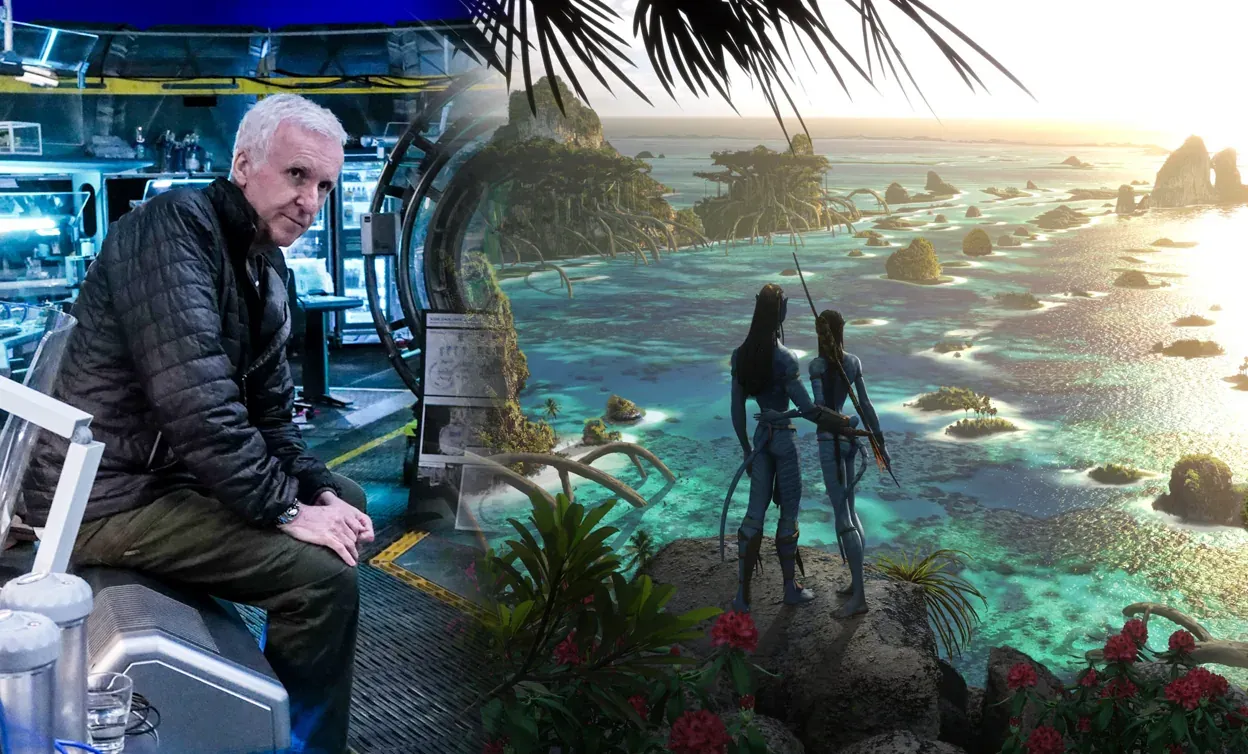 There’s also the theatre factor. Avatar films are engineered for the big screen, not casual streaming. Fire and Ash launched across premium formats including IMAX 3D, 4DX with motion seating, and Dolby Cinema, turning each screening into something closer to an attraction than a standard movie night. The experience feels amplified, immersive and urgent. That urgency matters. If you miss the theatrical window, you miss the spectacle as it was designed to be seen. It’s a key reason The Way of Water generated $2.3 billion globally, even arriving 13 years after the first film. In a streaming-first era, Cameron has preserved the idea of cinema as an event.
Critics frequently point to a familiar narrative structure across the trilogy. Humans invade. Jake and Neytiri fight to defend their home. Large-scale battles close the story. With Fire and Ash much of the criticism focused on repetition. But the continued commercial success suggests audiences are showing up for more than plot mechanics.
They’re showing up for Pandora.
Each film expands the world in meaningful ways. The original introduced glowing forests and bioluminescent ecosystems. The Way of Water opened up the oceanic culture of the Metkayina clan. Fire and Ash ventures into the harsher, volcanic lands of the Ash People. The evolving Na’vi cultures, creatures and environments create a sense of discovery that keeps even three-hour runtimes feeling immersive rather than indulgent. The world-building is cumulative, and that depth keeps audiences invested.
 Before every Avatar release, skepticism resurfaces. The original was dismissed as a risky gamble built around blue aliens and a constructed language. The Way of Water faced doubts after more than a decade in development. Fire and Ash triggered fresh conversations about franchise fatigue. And yet, each time, Cameron answers with numbers most filmmakers can only dream of. His real advantage isn’t just technological innovation, it’s understanding scale. Some films are meant to be watched. Avatar films are meant to be experienced. While streaming competes for convenience, Cameron gives audiences a reason to leave the sofa. Even if Fire and Ash didn’t surpass the grosses of its predecessors, it still crossed the billion-dollar mark faster than almost any other franchise.
That’s why the Avatar trilogy keeps winning. It delivers spectacle that demands a cinema screen and audiences, time and again, decide that’s worth showing up for.
Stalingrad Dollosa
Author