Lagaan Is 25 and It Still Might Be India’s Perfect Global Movie

There are films that travel because they are designed to. Then there is Lagaan, a nearly four-hour Hindi-language period drama about drought, colonial taxation and a village cricket match which, on paper, should have been a fairly difficult sell outside India. Instead, it became one of Indian cinema’s great global success stories.
Released in 2001 and directed by Ashutosh Gowariker, Lagaan starred Aamir Khan as Bhuvan, a villager who makes the slightly ambitious decision to challenge a group of British officers to a cricket match. Win, and the villagers avoid paying the punishing land tax known as lagaan. Lose, and the tax is doubled. No pressure.
Twenty-five years later, the film is being celebrated again, with Aamir Khan appearing at anniversary events in Melbourne and London, and its reputation arguably stronger now than when it first arrived. It remains one of only three Indian films ever nominated for the Academy Award for Best Foreign Language Film, but the more interesting thing is why it connected so widely in the first place.
Because Lagaan is incredibly specific. The setting is rural India under British rule in the 1890s. The language, music, customs and politics are unmistakably Indian, while cricket is not simply a sport in the film but a tool of power, humiliation, rebellion and eventually unity. Yet underneath all of that sits a story anyone can understand: a powerful group exploiting a weaker one, an impossible challenge, a team nobody believes in and a growing sense that perhaps, just perhaps, the underdogs might have a chance.
That is probably the secret.
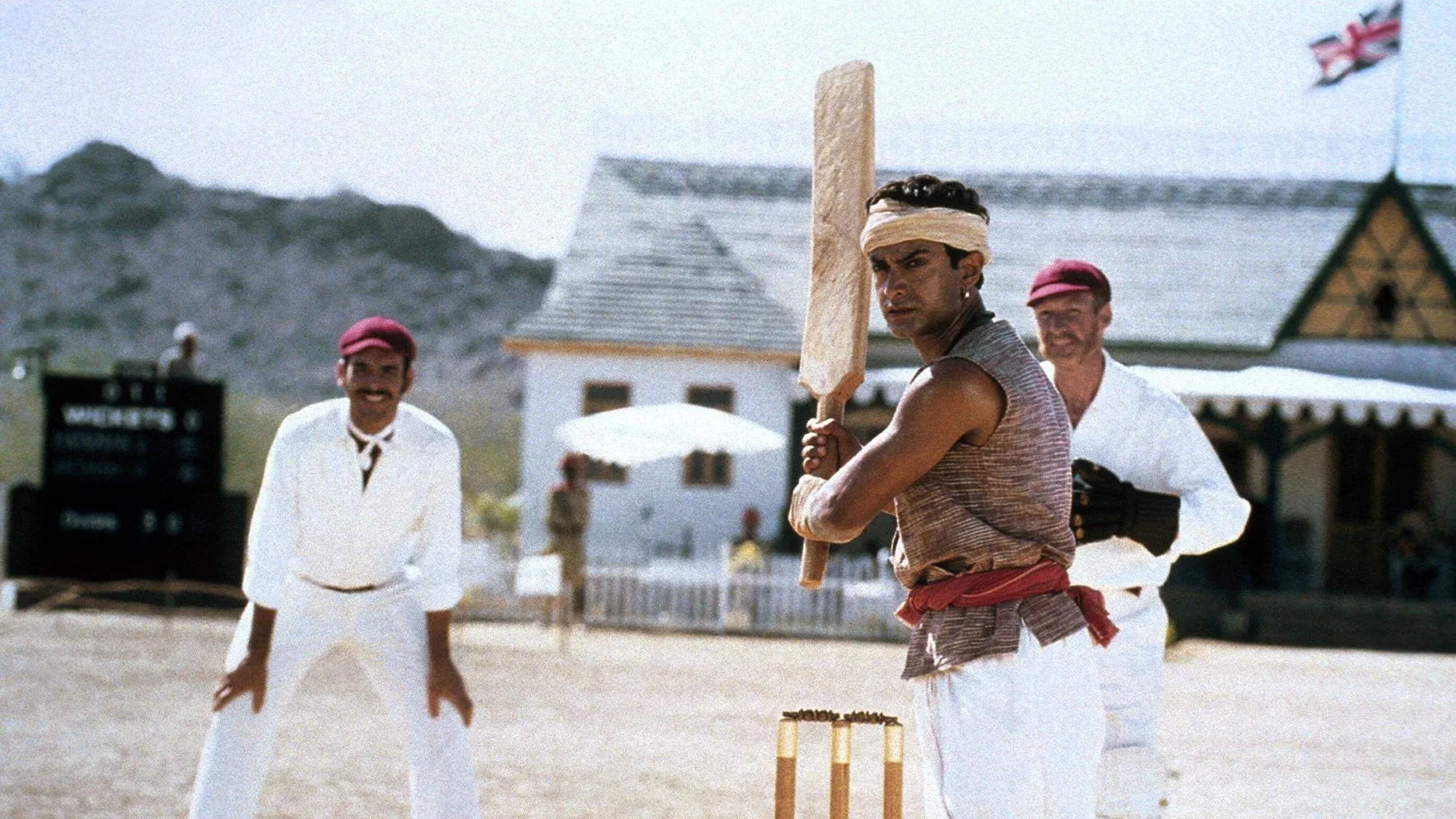 Lagaan is not really a cricket movie any more than Rocky is really about boxing. You do not need to understand leg before wicket to know that Bhuvan’s team desperately needs one more run, and you do not need a detailed knowledge of British India to understand arrogance, injustice and the pleasure of watching people in power become increasingly nervous.
And somehow, despite running close to four hours, it moves. There are songs, romance, comedy, rivalries, training, betrayal, redemption and an entire team of characters you gradually learn to care about, all building toward a final sporting contest so prolonged that most films would have finished, released a sequel and announced a streaming spin-off before the last ball is bowled.
But it works.
Partly because Aamir Khan gives the film such a strong centre, and partly because A.R. Rahman’s music gives everything an enormous emotional sweep, but perhaps most importantly because Lagaan never seems embarrassed by what it is. It does not dilute itself for an international audience, apologise for the songs, simplify the culture or try to look like Hollywood.
That confidence may be exactly why audiences outside India embraced it.
A quarter of a century later, Indian cinema is far more visible globally than it was in 2001. Streaming has made subtitles routine, RRR became a worldwide phenomenon and films from across India can now travel with a speed that would once have seemed impossible. Lagaan got there early, proving that a deeply local story could become universal without becoming less local.
Twenty-five years on, that might still be its greatest victory.
Even bigger than the cricket.
Jim Irving
Author