YouTubers That Took on Hollywood and Won
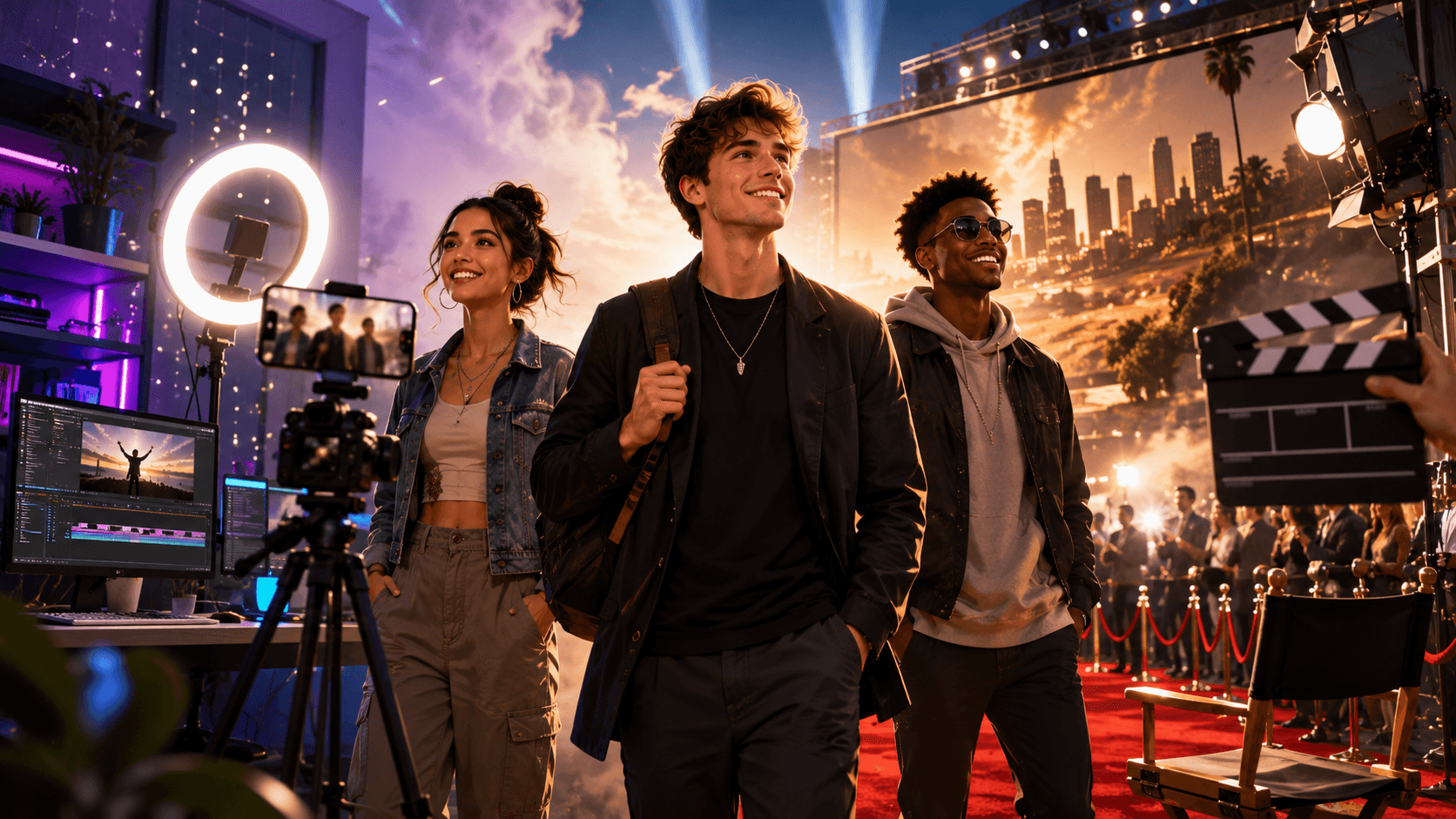
There was a time, not that long ago, when YouTube stars were treated like the noisy neighbours of the entertainment industry. Loud, scrappy, wildly popular with people under 25, but not exactly welcome at the big Hollywood dinner table. They were allowed to sell merch, rack up views and maybe pop up in a cameo, but proper films? Big-screen storytelling? Critical respect? That was supposed to belong to the grown-ups.
Well, that idea now feels like a dusty old DVD in a streaming world.
Over the last decade, a new type of filmmaker has started kicking the studio door open. This generation of filmmakers didn't come via drama school, film school, agency packages or the usual endless networking circuit. They came from bedrooms, sketch channels, gaming videos, horror shorts and obsessive online fanbases. They learned by doing it. They built audiences one upload at a time. Then, when Hollywood finally looked up, they were already halfway there.
The most obvious poster boy for this shift is Bo Burnham. Before Eighth Grade, Burnham was the awkwardly brilliant YouTube kid with a keyboard, a camera and a brain wired somewhere between stand-up comedy, existential panic and internet chaos.
 Then he wrote and directed one of the most painfully accurate films ever made about teenage life online. Eighth Grade was not a vanity project. It was not “YouTuber makes movie” as a gimmick. It was a proper film. Sharp, human, funny, anxious and full of empathy. Burnham did not just cross over. He arrived with a film that understood the internet generation better than most studios ever had.
Then there is Markiplier, who represents something slightly different, and possibly even more disruptive.
 With Iron Lung, he showed what happens when a creator with a huge, loyal audience decides not to wait for permission. Markiplier built his name in gaming, but the clever bit is that he understood atmosphere, tension and fan behaviour long before stepping into feature horror. His audience did not need a billboard campaign to know why they should care. They had been on the journey with him already. That is the bit Hollywood should be studying very carefully. A creator like Markiplier doesn't just bring a film. He brings "the buzz" with him.
Joe Penna, better known to early YouTube fans as MysteryGuitarMan, is perhaps the classiest example of the slow-burn route. He did not simply turn his channel into a movie. He used YouTube as a training ground, then became a serious filmmaker.
 Arctic, starring Mads Mikkelsen, is a survival thriller stripped right down to the bone. No shouting influencer energy. No wink to the subscriber base. Just clean, confident, cinematic storytelling. Then came Stowaway, another proper feature with proper stars and proper ambition. Penna is the answer to anyone who still thinks YouTube creators cannot become filmmakers. They can. They already have.
Of course, not every YouTube-to-movie story is about critical acclaim. Sometimes impact is about being first, being loud and proving a model exists. That is where Smosh comes in.
 Smosh: The Movie may not be troubling many “greatest films ever made” My lists, but that's not really the point. Ian Hecox and Anthony Padilla helped prove that a YouTube brand could become a feature-length event for its own audience. It was early, a bit chaotic and very much of its time, but it mattered. Before everyone was talking about creator economies, fan funnels and direct-to-community launches, Smosh were already testing whether internet fame could stretch into movie territory.
Then there is the genuinely fascinating horror wave. Kane Parsons, better known as Kane Pixels, is one of the most exciting examples of YouTube as an IP machine.
 Parsons' Backrooms video series didn't feel like traditional short films. They felt like found footage from a nightmare you had half-remembered after too much late-night scrolling. Low-budget, atmospheric, weirdly convincing and completely native to the internet. The fact that this world moved towards feature film production says a lot about where horror is heading. The next great scary idea might not come from a studio pitch deck. It might come from a teenager with editing software, a strange obsession and millions of people watching in the dark.
And finally we have Curry Barker with Obsession, a fresh reminder that YouTube-native horror talent is no longer a novelty.
 Barker built his reputation through short-form scares, sharp concepts and an understanding of what makes online audiences lean in. Horror has always loved outsiders. It rewards invention, timing and nerve more than polish. That makes it a perfect genre for creators who have spent years grabbing attention in seconds and holding it without a studio safety net. Obsession feels like part of a bigger movement: horror filmmakers being discovered not through festivals alone, but through the audience they have already earned.
What connects all of these creators is not just that they started on YouTube, it's that they understood something Hollywood often forgets: audiences are not abstract demographics. They are communities. They follow voices, not just franchises. They care when they feel like they discovered someone before the rest of the world caught up.
That does not mean every YouTuber should make a movie. Please, absolutely not. For every smart crossover, there are plenty of projects that feel like stretched sketches with better lighting. But the best examples prove something important. YouTube is no longer just a promotional platform. It's a development lab, a testing ground, a fan engine and, increasingly, a film school with comments enabled.
Hollywood used to look at YouTube and see kids messing around online. Now it sees writers, directors, producers, horror auteurs, comedy voices and built-in audiences. The creators didn't wait to be invited in. They uploaded, evolved, built the crowd and walked through the front door anyway.
Jim Irving
Author