Ramayana Might Be Indian Cinema’s Biggest Global Gamble Yet

Indian cinema has spent years proving that its biggest films can travel.
RRR became a global phenomenon. Baahubali found huge audiences far beyond its home market. Pushpa, KGF and others helped turn Indian blockbusters into international events rather than regional curiosities. Ramayana wants to go much further.
Nitesh Tiwari’s Ramayana: Rise of a Legend opens worldwide on 5 November 2026, with Ranbir Kapoor as Rama, Sai Pallavi as Sita, Yash as Ravana and Sunny Deol as Hanuman. It is the first half of a two-part epic reportedly costing more than ₹4,000 crore, or roughly $500 million, making the project comfortably the most expensive Indian film franchise ever attempted. That alone would make it a gamble. But the scale of the international ambition is even more striking.
The film is being positioned for release in more than 100 countries and around 50,000 screens, with IMAX presentations, Sony handling international distribution and an English-language version designed specifically to help the story travel. The production has even used AI-assisted lip-sync technology so dubbed performances can better match the actors’ facial movements, while the music comes from the fairly modest pairing of A.R. Rahman and Hans Zimmer. No pressure, then.
The difficult part is that Ramayana is not simply another fantasy story. For millions of people, it is one of the most important stories ever told, carrying religious, cultural and emotional significance that goes far beyond cinema. That creates a fascinating tension for the filmmakers: how do you make something accessible to somebody in Los Angeles, London or Tokyo who may know absolutely nothing about Rama, Sita or Ravana without simplifying a story that audiences in India know intimately? That might be the real test.
Hollywood fantasy usually arrives with an instruction manual built into the storytelling. The Lord of the Rings patiently introduces Middle-earth. Marvel spent years teaching audiences about Infinity Stones, multiverses and people named Thanos. Ramayana starts with something different: a story that does not need introducing to a huge part of its core audience at all.
The temptation would be to internationalise it. The smarter move may be not to.
Some of the biggest global successes of recent years worked precisely because they did not sand away their identity. Parasite remained unmistakably Korean. RRR did not behave like a Hollywood action film desperately seeking approval. Audiences increasingly seem perfectly comfortable entering worlds that were not designed around them. That gives Ramayana an opportunity. It also gives it an extraordinary amount to lose.
Producer Namit Malhotra has already spoken about ambitions far beyond two films, including spin-offs, games and even theme-park experiences. In other words, this is not being treated as a single release. It is being positioned as the foundation of something enormous. And that changes the stakes completely.
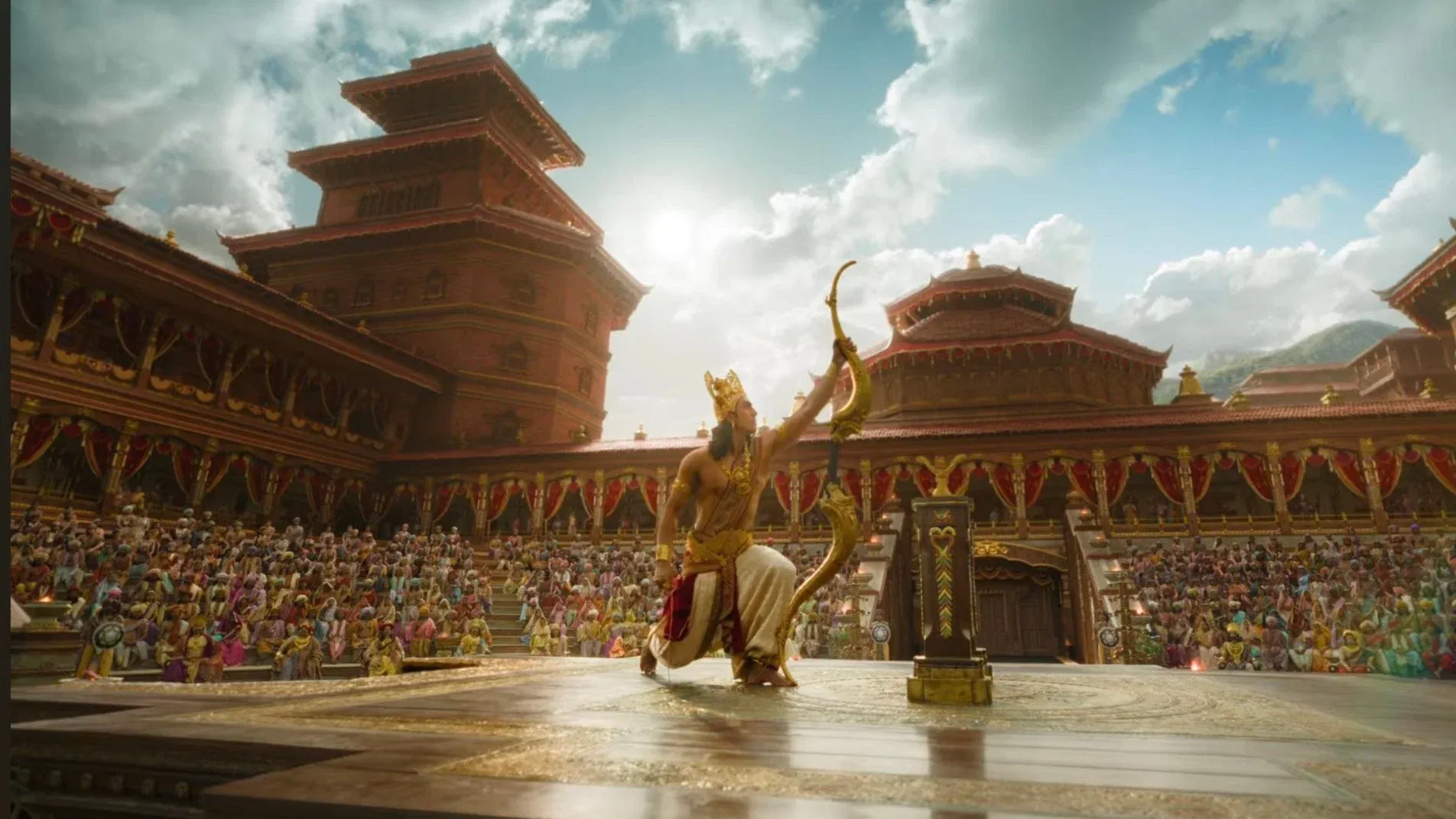 If Ramayana works globally, it could reshape expectations around what Indian cinema can export at blockbuster scale. It would prove that one of India’s oldest and most culturally specific stories can stand alongside the biggest fantasy franchises in the world without becoming less Indian in order to do it.
If it doesn’t, the bill is going to be spectacular. Either way, this is not a cautious move. It is Indian cinema pushing all its chips into the middle of the table.
Jim Irving
Author